
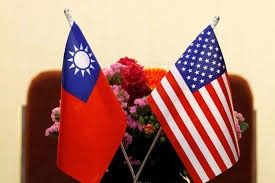

Taiwan’s premier has hailed the Taiwan U.S. trade deal as the “best tariff deal” offered to any country with a trade surplus with Washington. Under this historic agreement, the U.S. will cut tariffs on Taiwanese exports to 15% in exchange for roughly $250 billion in Taiwanese investment in U.S. technology, semiconductors, artificial intelligence (AI), and energy sectors.
Officials say the Taiwan U.S. trade deal levels Taiwan’s tariff treatment with partners like Japan, Korea, and the European Union and acknowledges Taiwan as a strategic economic partner to the U.S. It also aims to establish U.S.-based industrial hubs to boost domestic production, particularly in cutting-edge areas.
Economic experts believe the pact will strengthen U.S.–Taiwan tech cooperation, especially in semiconductor supply chains, while reducing trade friction. Taiwanese tech giants like TSMC have pledged significant investments in the U.S., with plans for new facilities and expanded production capacity, supporting American manufacturing jobs and supply chain resilience.
China has strongly objected to the deal, calling it a violation of the “One-China” principle and asserting that it implicitly recognizes Taiwan’s sovereignty.
This Taiwan U.S. trade deal comes amid rising U.S.–China tensions over technology, trade, and regional influence, further cementing Taiwan’s role as a critical player in the global semiconductor industry.