
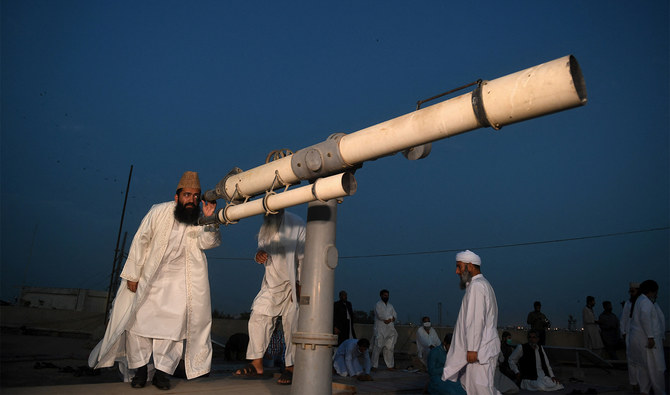

The Central Ruet-e-Hilal Committee (RHC) will hold its meeting in Peshawar on February 18 (Wednesday) to observe the crescent that will signal the beginning of Ramadan 1447AH. At the same time, zonal moon-sighting committees will meet in Islamabad, Lahore, Karachi and Quetta.
The central session will be chaired by Maulana Syed Muhammad Abdul Khabeer Azad. The committee will decide whether the first day of Ramadan will fall on February 19 or 20. The Ministry of Religious Affairs has formally notified that zonal committee meetings will take place simultaneously in federal and provincial capitals.
Sources from the Ministry of Science and Technology suggest there is a strong possibility that Ramadan may begin on the same day in both Pakistan and Saudi Arabia this year. According to scientific estimates, the new moon will be born on February 17.
However, experts believe the crescent is unlikely to be visible on February 17 in Saudi Arabia, the United States, Africa, Europe and several other regions. Astronomical forecasts indicate that the moon should be clearly visible on February 18 in Pakistan and many other countries, including major cities such as Karachi, Islamabad, Peshawar and Makkah.
If confirmed through official testimony, Ramadan in Pakistan is expected to commence on Thursday, February 19.
Moon Birth and Visibility Forecast
The Pakistan Meteorological Department (PMD) earlier stated that the moon will be born at the conjunction point at 5:01pm on February 17. Astronomical data suggests a reasonable chance of sighting the crescent on February 18, which corresponds to the 29th of Shaban 1447AH.
In an advisory sent to the Research and Reference Wing of the Ministry of Religious Affairs, the PMD’s Climate Data Processing Centre noted that weather conditions across most parts of the country are expected to remain fair or partly cloudy on the evening of February 18, potentially aiding visibility.
The department also shared province-wise moonset timings (PST) for February 18. The crescent is expected to remain visible until 7:24pm in Sindh, 7:08pm in Punjab, 7:47pm in Balochistan, 7:13pm in Khyber Pakhtunkhwa, 6:58pm in Azad Jammu and Kashmir, and 6:53pm in Gilgit-Baltistan. Areas not specifically listed may also observe the moon according to their local sunset timings.
As per tradition, the Central Ruet-e-Hilal Committee will meet on the 29th of Shaban to review eyewitness accounts and officially declare the start of Ramadan. Religious scholars from various schools of thought will attend the session.
Ramadan, observed with deep devotion, will see millions of Pakistanis — along with billions of Muslims worldwide — fasting from dawn to sunset. Across the country, the holy month is marked by increased charitable activities, community iftar arrangements and roadside stalls offering food to those returning home at sunset.