
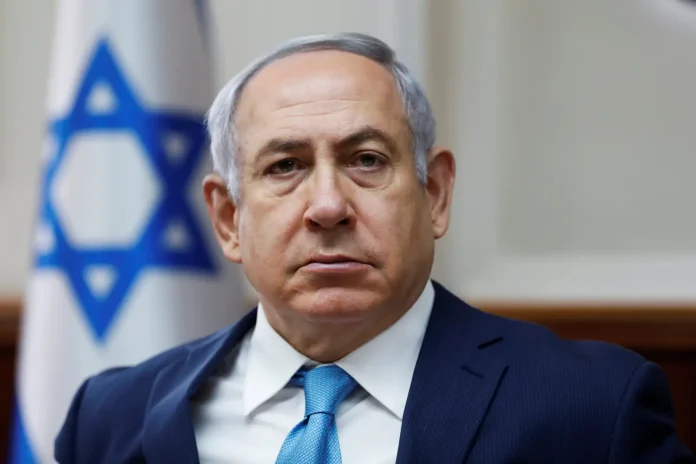

Mazaj News (Web Desk) Israeli Prime Minister Benjamin Netanyahu has asked US President Donald Trump to postpone any potential American military action against Iran, according to a report published by The New York Times. The move reflects rising concern across the region about the possibility of a larger conflict.
Netanyahu held a phone call with President Trump on Thursday, the same day the US leader publicly indicated that Iran may have relaxed its domestic repression and stopped carrying out executions. Trump said this assessment was based on information from “very important sources on the other side,” comments that were interpreted in Washington as a sign that immediate military action might not be imminent, the report noted.
The Israeli prime minister’s request comes amid similar pressure from key Arab allies of the United States, who have warned the Trump administration that an attack on Iran could spark a wider regional war. A senior Gulf Arab official told the newspaper that several countries fear such a strike would have severe consequences.
According to the report, officials from Qatar, Saudi Arabia, Oman and Egypt have reached out to senior US officials over the past two days to express concerns that military action could destabilize the region, disrupt global energy supplies and provoke Iranian retaliation beyond American targets.
At the same time, these four Arab states have also been urging Iranian leaders to avoid targeting neighboring countries if the United States proceeds with a strike, highlighting efforts to prevent escalation on both sides, the Gulf official said.
Two diplomats based in the region confirmed that a number of Arab governments have privately cautioned Washington against launching an attack, pointing to an unusual alignment between Israeli restraint and Arab apprehension over the consequences of open conflict with Iran.
Saudi Arabia has publicly voiced its stance in restrained language, with Minister of State Adel al-Jubeir stating in Riyadh that the kingdom believes disputes should be settled through dialogue and negotiations rather than military force.
Netanyahu also spoke earlier this week with US Vice President JD Vance, coinciding with meetings at the White House where senior Trump administration officials reviewed possible military options against Iran, according to US officials cited by the newspaper. This highlighted how diplomatic efforts and military planning have been proceeding at the same time.
The White House has provided limited information about these discussions. Press Secretary Karoline Leavitt confirmed that President Trump spoke with Netanyahu but declined to offer further details, while the Israeli prime minister’s office did not respond to requests for comment, the report said.
Overall, the situation underscores a familiar dilemma for the Trump administration: balancing displays of military strength with the desire to avoid another prolonged conflict in the Middle East, especially as regional allies warn more about the risks of escalation than the benefits of confrontation.
The report concluded that the shared calls for restraint from both Israel and Arab states suggest that, despite deep disagreements over Iran’s policies, many regional actors see greater danger in rushing into military action than in allowing diplomacy more time.