
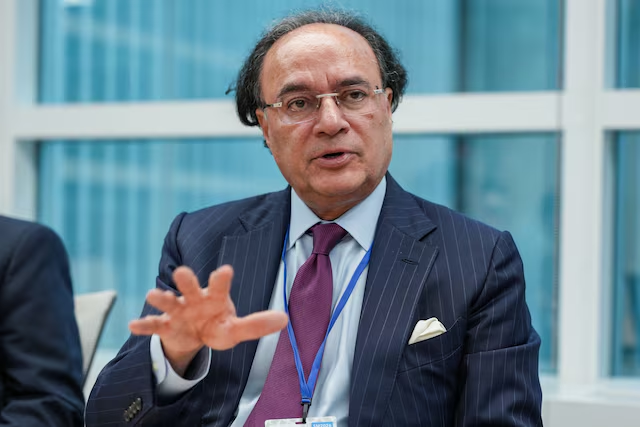

Pakistan’s finance chief, Muhammad Aurangzeb, has announced that Saudi Arabia will provide an additional $3 billion in deposits to Pakistan and extend its existing $5 billion facility for another three years, offering crucial support to the country’s external finances.
Speaking in Washington, D.C. during the World Bank–IMF Spring Meetings 2026, Aurangzeb said the previously short-term Saudi deposit would now shift to a longer-term arrangement, removing the need for annual rollovers.
The announcement comes as Pakistan prepares to repay a $3.5 billion loan to the United Arab Emirates this month—an obligation that could temporarily strain foreign exchange reserves and test targets set under the International Monetary Fund programme.
Aurangzeb described the Saudi assistance as arriving at a “critical moment,” noting it would help stabilize reserves and strengthen the external account. The government aims to raise reserves to around $18 billion—equivalent to about 3.3 months of import coverage—by the end of the fiscal year.
He emphasized that Pakistan remains committed to meeting all its external debt obligations on time, highlighting the recent repayment of $1.4 billion, including a Eurobond, as a smooth and uneventful process.
The finance minister also revealed that Pakistan has a structured external financing plan in place, which is being executed with discipline. He referenced a recent meeting in Islamabad with Saudi Finance Minister Mohammed bin Abdullah al Jadaan, attended by senior Pakistani officials, where the support package was finalized.
Aurangzeb noted that authorities had intentionally avoided public statements on the matter until formal confirmation was secured, despite widespread speculation.
He expressed appreciation to Saudi leadership, particularly Mohammed bin Salman, for their continued backing, and credited Pakistan’s leadership and institutions for coordinating the agreement.
Highlighting improving sentiment, Aurangzeb said Pakistan has been receiving positive feedback from international financial institutions such as the IMF and the World Bank, as well as from global investors. He added that the country’s recent diplomatic efforts have also been recognized internationally.
Looking ahead, Pakistan is advancing broader financing initiatives, including a Global Medium-Term Note programme and its first Panda Bond issuance. Authorities are also considering Eurobonds, Islamic sukuk, and other financing instruments to meet future needs.
Aurangzeb reiterated the government’s commitment to economic stability, reform continuity, and strong engagement with international partners, adding that further details would be shared after the conclusion of the visit.